Licensed & Insured — FL CFC1434216 · 20+ Years Experience · Upfront Flat-Rate Pricing · 12-Month Workmanship Guarantee · Se Habla Español
Hydro Jetting in Davie & Broward County
Jetting scrubs the whole inside wall of a drain line with high-pressure water, not just a hole through the clog. We check the pipe first, then clean it back toward its original diameter so grease lines stop blocking every few months.
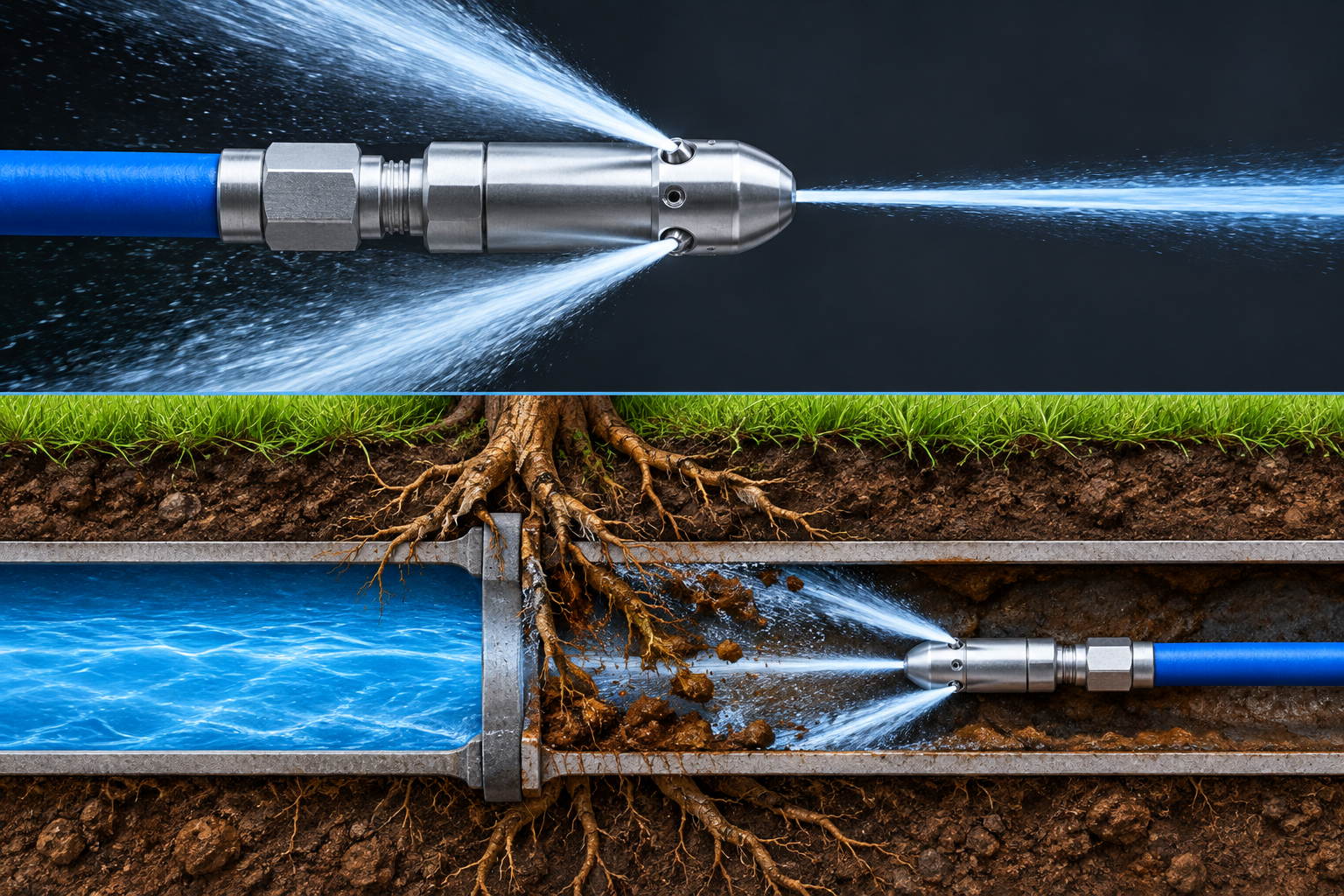
Hydro jetting is high-pressure water used like a scraper. A hose goes into the line and the nozzle on the end fires water backward and forward — the rear jets pull the hose down the pipe while the front jets cut into whatever is blocking it. Because those jets spray in a full circle, the water scours the entire inside wall of the pipe as the hose travels, instead of punching one hole through the middle of a clog.
That difference is why jetting is used where a cable is not enough. A cable reopens flow but it leaves the walls coated — grease, soap, scale, and slime stay behind, narrowing the pipe and giving the next blockage something to grab onto. Jetting takes the pipe back toward its original inside diameter, which is why a grease line that clogged every few months often stays clear far longer after it is jetted than after it is cabled.
Jetting is not right for every pipe. Pressure that cleans a sound line can destroy a bad one, so on older or unknown lines we look inside with a camera before we put water in. If the pipe is deteriorated, we tell you and use a different method rather than risk breaking it.
What It Is and When You Need It
Jetting is the right tool when the pipe itself is the problem, not just the clog sitting in it. It is what we use on kitchen grease lines and dishwasher or disposal discharges, where grease has coated the walls for years and a cable only reopens a channel through it. It is used for heavy scale and build-up inside old cast iron, for flushing the cuttings out after roots have been cut, and for restaurant and commercial kitchen lines and the drains feeding a grease trap, where the volume of grease is simply higher than a home line ever sees.
It is also useful on a line that keeps clogging a few weeks after every cabling, and as a cleaning step before a camera inspection — you cannot see the condition of a pipe wall through a layer of grease. If the same line has backed up twice in a season, jetting is usually the conversation worth having.
Grease-heavy lines are not a one-time job. A busy household kitchen line often does well on a yearly cleaning. A restaurant line with fryers running all day usually needs it far more often, sometimes quarterly and sometimes monthly. The right interval comes from your cooking volume, whether there is a grease trap in front of the line, and how the pipe looks inside. We would rather tell you what your line actually needs than sell you a schedule it does not.
When jetting is the wrong tool: cast iron that has scaled down to a fraction of its bore and is starting to crumble, cracked or crumbling clay tile, a line with a known break or collapse, a belly where water already stands, or a joint that has separated. In those pipes, pressure pushes water and debris where you do not want them, including up through a fixture inside the house. That is why the camera check comes first, and why we will cable, spot repair, or reline instead when that is the honest answer.
How We Do It: Water, Nozzle, and a Camera Check
Work starts at an access point. If the line has a cleanout, we open it and feed in from there; if it does not, we can go through a pulled fixture or add a cleanout, which is separate work quoted before we begin. On older homes, on lines with a history, and on any pipe we have not seen before, we run the camera first — that check is what decides whether jetting is safe, and it takes minutes.
Then it comes down to two choices: the nozzle and the pressure. A grease nozzle works differently from a root-cutting nozzle, and a nozzle sized for a two-inch kitchen line is wrong for a four-inch main. Pressure is set to the pipe and to what is inside it, not run at whatever the machine can produce. Where roots are the problem we usually cut them with a cable first, then jet to flush the cuttings away and clean the joint they were growing through; jetting straight into a solid root mass mostly sends water back at us.
The hose is fed down the line and worked back and forth in passes so the jets scour the full length, while we watch the flow at the cleanout and in the house to be sure water is going where it should. Everything that comes out has to go somewhere, so we contain it and protect kitchen floors. On a grease line, what flushes back is the proof the job worked. When the line runs clear we put the camera back in to confirm the walls are clean and nothing was damaged, and we tell you what we saw.
What Affects the Cost
Jetting is quoted flat-rate before we start and the price follows the job. What moves it: how long the run is; the size of the pipe, since a two-inch kitchen branch, a four-inch main, and a commercial line each take different equipment and time; what is inside the line — grease and sludge clear faster than hard scale, and roots usually mean cutting first, which adds work; the condition of the pipe and whether a camera check is needed before jetting; how we get access, whether that is an open cleanout, a pulled fixture, or locating one that has been buried; how many lines are involved, since a restaurant may need the kitchen line, the floor drains, and the main serviced together; and how much containment and cleanup the job needs, which is always more in a working kitchen.
Timing matters too — after-hours and emergency work costs more than a scheduled visit. Whether you are clearing a line once or putting it on a maintenance schedule changes the price as well, and if the camera shows a repair or relining is needed, that work is quoted separately so you can decide on it with the footage in front of you.
Why Broward Homeowners Call Us
We are a licensed Florida plumbing contractor, license CFC1434216, based in Davie and serving Broward County for more than 20 years. We work on homes and on restaurant and commercial kitchen lines, where the same grease that clogs a house drain shows up in far larger volume. You get a flat-rate price before we start, a 12-month workmanship guarantee on the work, and the camera footage handed to you rather than described to you.
The part that matters most with jetting is restraint. Pressure is the tool, and on a pipe that cannot take it, the wrong decision costs you a repair you did not need to buy. We check first, we use the pressure the pipe can handle, and if the camera shows the line is too far gone to jet safely, we say so and give you the alternatives instead of running water through it anyway. Se habla español, and our 24/7 emergency line is answered live.
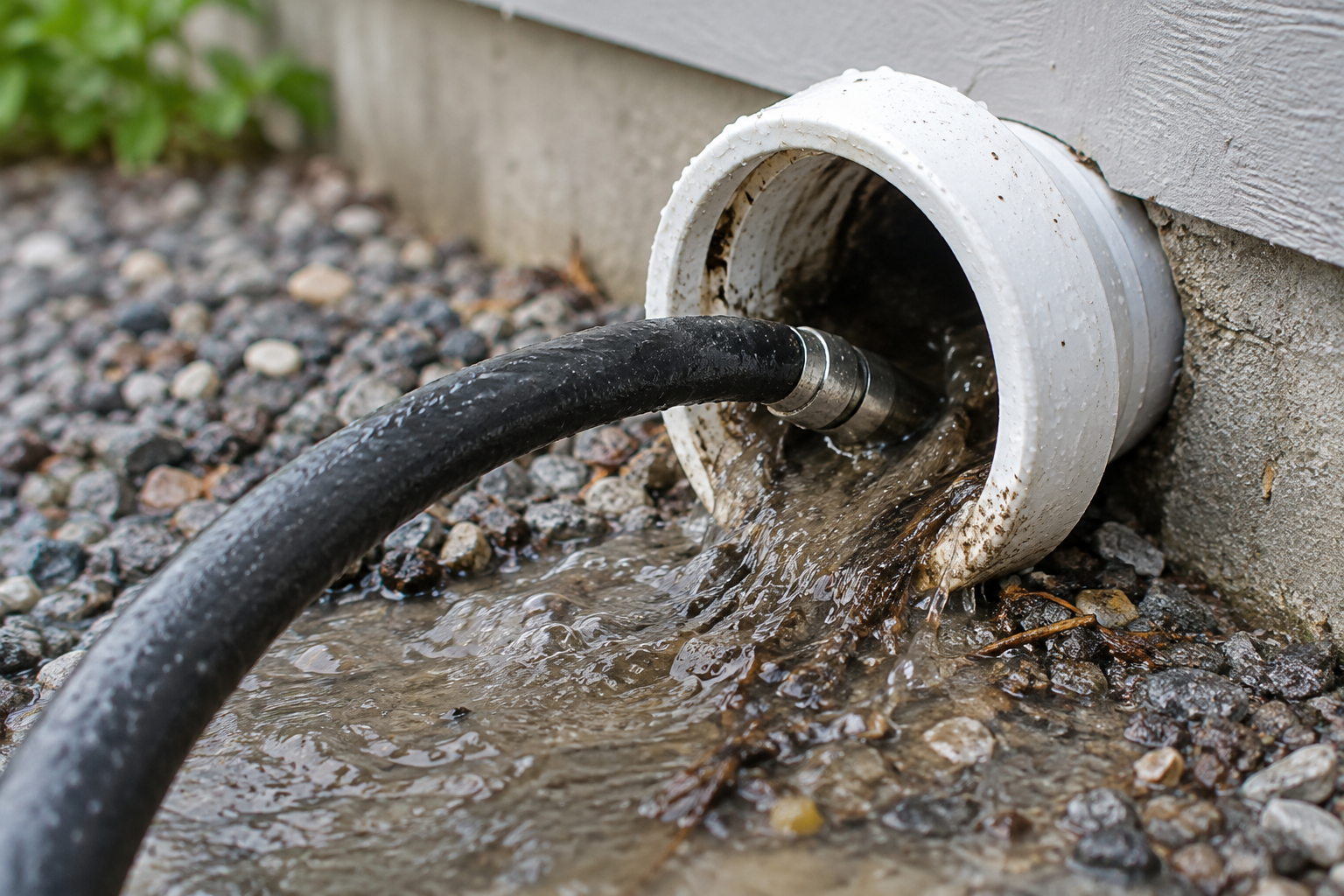
Job photo: the jetting hose feeding into the cleanout while water and loosened debris flush back out of the line.
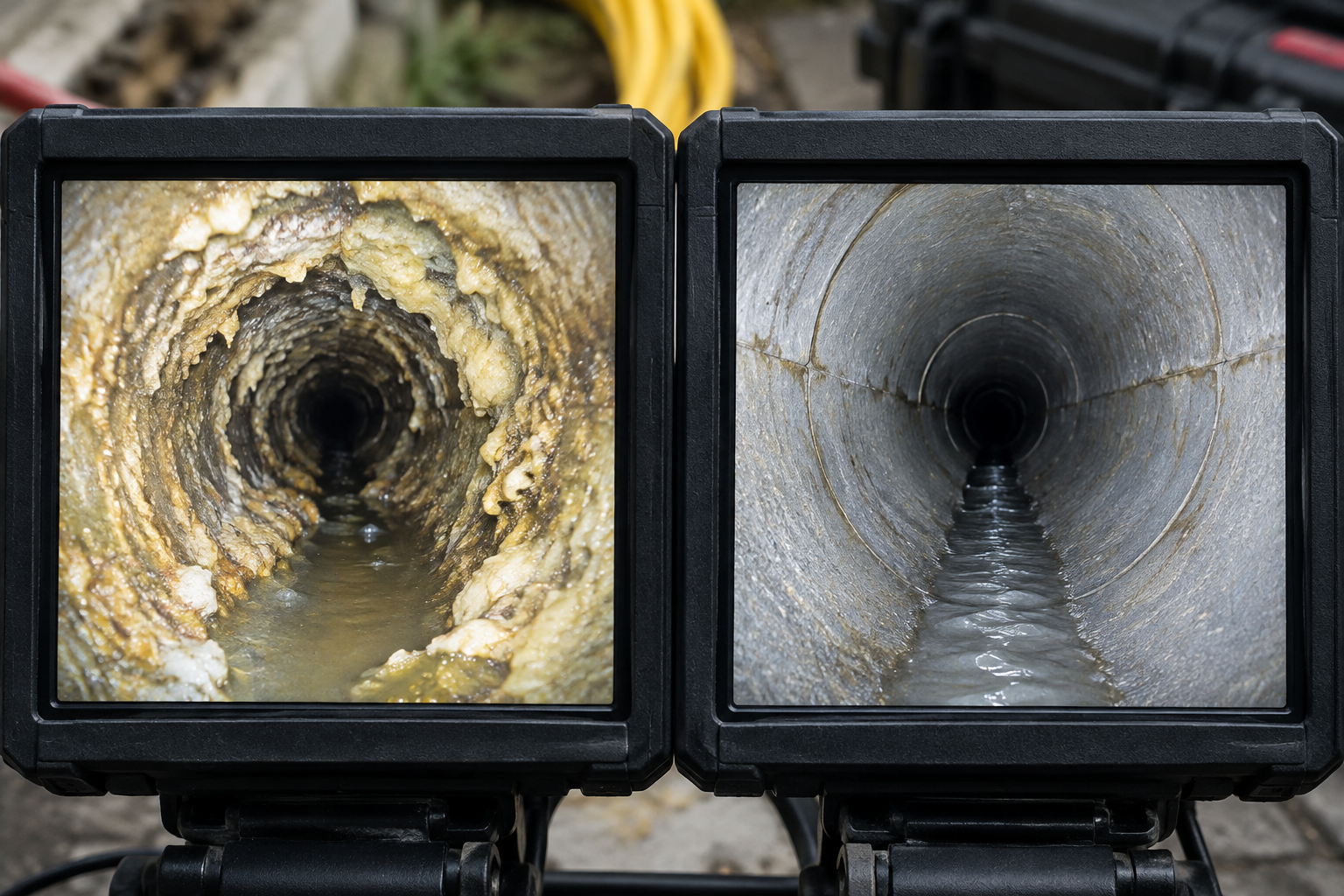
Job photo: in-pipe camera screen showing a line coated with heavy buildup before jetting, next to the same pipe after it was cleaned.
Book Hydro Jetting
If a kitchen or main line keeps clogging, or you have been told a line is grease-bound, book a visit and we will check the pipe and jet what can safely be jetted. For a backup happening right now, call (754) 258-5599 — the emergency line is answered live.
Hydro jetting is part of our Drain Cleaning in Davie, FL service. For a line that is blocked solid with roots or heavy build-up, see Sewer & Main Line Cleaning, and if the pipe has never been looked at inside, start with a Sewer Camera Inspection.
Common Warning Signs
Don't ignore these signs — they usually mean it's time to call a plumber.
How Scheduling Works
Three simple steps from phone call to fixed.
Call or Book Online
Call (754) 258-5599 or use our online booking tool to schedule a time that works for you.
We Arrive On Time
Your licensed plumber arrives within the scheduled window and diagnoses the issue.
Upfront Price, Then We Work
You get a flat-rate quote before any work begins. You approve, we fix it — no surprises.
Service Area
Based in Davie, FL, we serve homeowners across Broward County and South Florida. Same-day service is available for emergencies throughout our coverage area.
Frequently Asked Questions
Is hydro jetting safe for my pipes?
What is the difference between jetting and snaking?
Can you jet a line with tree roots in it?
How often should a grease-heavy line be jetted?
Do you check the pipe before jetting it?
Related Plumbing Services
See how else we can help with your plumbing.