Licensed & Insured — FL CFC1434216 · 20+ Years Experience · Upfront Flat-Rate Pricing · 12-Month Workmanship Guarantee · Se Habla Español
Underground Water Line Leak Detection & Repair in Broward County
Water under your yard does not announce itself. We prove whether the loss is on your side of the meter or the utility's, then trace the buried line by isolation, pressure testing, acoustic listening, and line tracing, so we dig one opening over the leak instead of a trench.
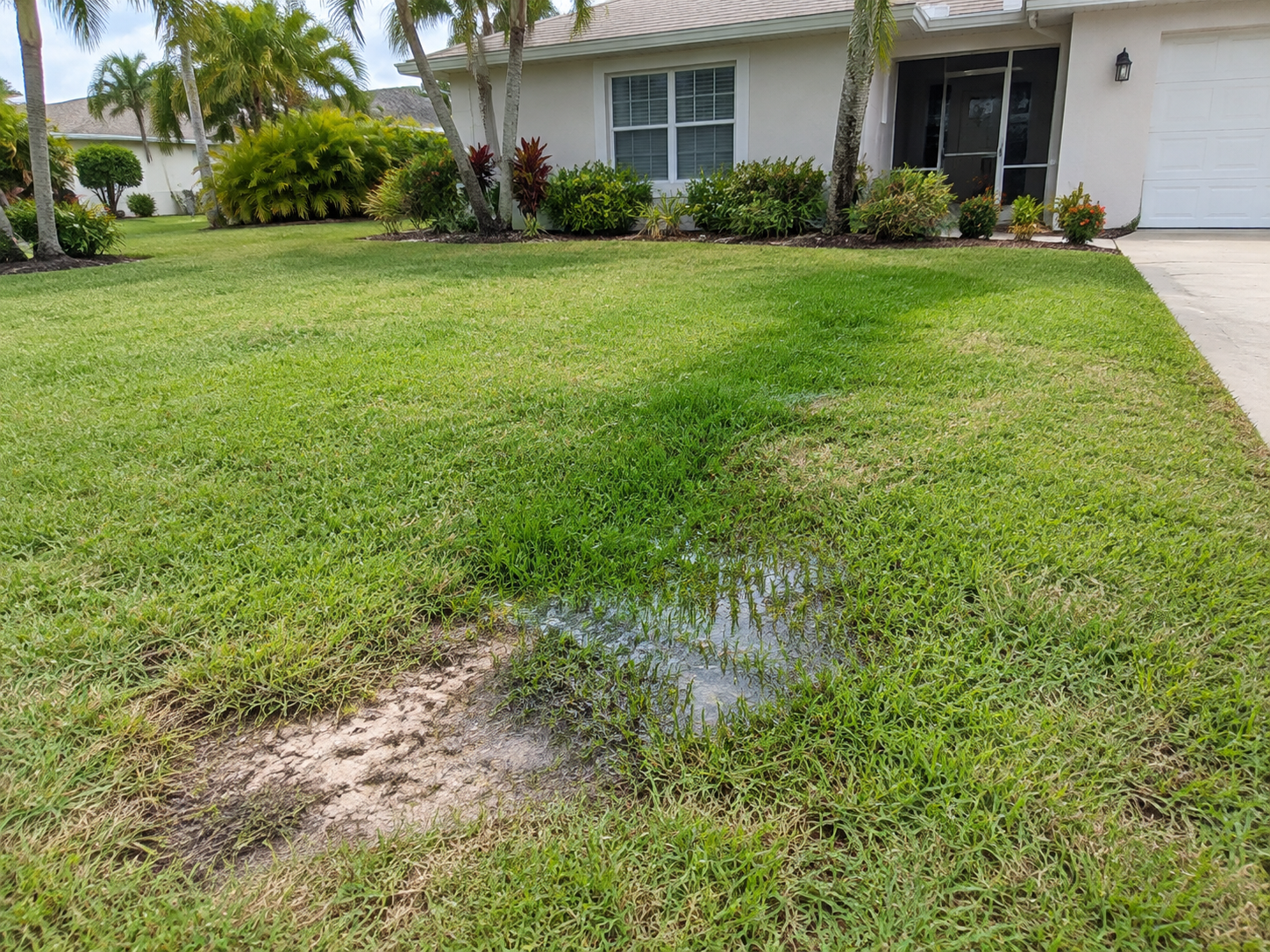
Your water service line is the pipe that carries water from the meter at the edge of your property to your house. In most Davie and Broward County neighborhoods that line is buried, usually a few feet down, running under the grass and sometimes under a driveway, a walkway, or a pool deck before it comes up at the house to feed every fixture inside. When that line fails, nothing drips in the kitchen. The water leaves the pipe out in the yard, soaks into sandy soil, and shows up as a wet patch, a greener strip of grass, or a water bill that keeps climbing.
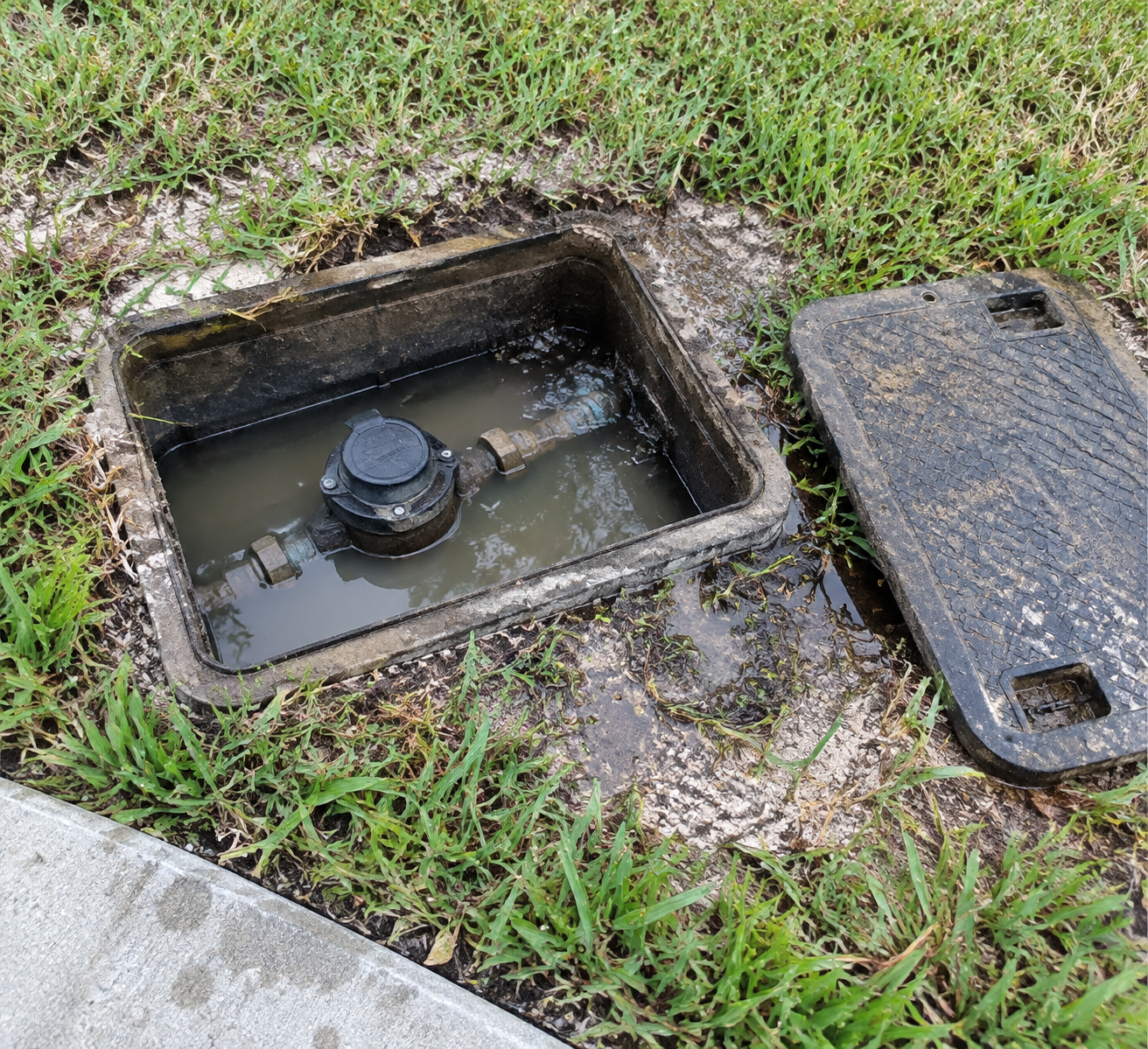
The meter is the dividing line. The utility owns the main in the street and the meter itself, and everything from the outlet side of the meter to the house is the homeowner's responsibility. That is the stretch we work on, and it is where a yard leak almost always belongs. Knowing which side you are on before you call anyone saves time, and confirming it is the first step of every detection we run.
These lines fail for reasons that have little to do with how carefully they were installed. Broward's sandy soil drains quickly but shifts, especially after a heavy rain, and a moving bed bends and stresses buried pipe. The water table sits high through the wet season, so the pipe spends months sitting in saturated soil. Municipal pressure runs high. Copper installed in the 1970s and 1980s has reached the age where pinholes open up, and galvanized pipe in older homes corrodes through. Tree roots press against joints and wrap lines. Fertilizer and soil chemistry attack the outside of the pipe. A pinhole in a pressurized line does not close on its own, and the ground around it gets wetter every day.
The signs usually show up outside first. A patch of grass that stays soggy when the rest of the yard is dry. A stripe of lawn that is greener and growing faster than everything around it, following the buried line across the yard. A soft or slightly sunken spot in the grass, at the edge of the driveway, or alongside the walkway. Water standing in or running out of the meter box. Water pressure inside the house dropping when two fixtures run at once. A meter leak indicator that creeps with every fixture and appliance shut off. Sometimes the first thing a homeowner notices is a water bill that jumped with no change in how the house is being used.
An underground leak gets expensive because of what the water does below the surface. Running water erodes the soil bed, opens voids under driveways, walkways, and pool decks, drowns landscaping, and keeps the yard wet enough to invite insects. A leak that has been running for weeks can move a surprising amount of sand. Locating it early is what keeps the repair to one opening instead of a trench across the property.
Every underground leak detection and repair is quoted flat-rate before work begins and backed by our 12-month workmanship guarantee. We are a licensed Florida plumbing contractor, license CFC1434216, based in Davie and serving Broward County for more than 20 years. Se habla español.
What It Is and When You Need It
Underground water line leak detection is the work of proving where water is escaping from the buried line before anyone picks up a shovel. It is not the same thing as noticing you have a leak. The symptoms of a failed service line overlap with a broken irrigation zone, a pool fill valve that never shuts off, a water softener stuck in backwash, a leaking toilet flapper, and even a neighbor's sprinkler running into your yard. Those are all cheaper to fix than a buried line, so they get ruled out first — that is what the testing is for.
You need detection when water is leaving the system somewhere between the meter and the house and the evidence keeps pointing at the ground: a meter that moves with everything shut off, a wet spot that never dries, a yard that stays soft after the rain stops, pressure that sags whenever the shower and the washing machine run together. There is no hot side to a service line, so unlike a slab leak there is no warm patch of floor to follow. This line carries cold water under constant pressure, which means it leaks around the clock and shows itself outdoors rather than inside the house.
An irrigation leak is the one homeowners most often mistake for a service line leak, and the two behave differently. Irrigation runs off its own shutoff valve and its own zone controls, so a break in a sprinkler line usually shows up as one wet or low spot in a bed that only changes when that zone runs. A service line leak continues whether the sprinklers are off or on. We shut the irrigation and pool fill down, retest the meter, and that single test separates the two before anything gets dug. If the leak turns out to be irrigation, we tell you that plainly.
How We Do It: Finding the Leak Before We Dig
The first step is the meter test, and it costs nothing but a few minutes. We shut off every fixture and appliance, close the house valve, and shut down the irrigation and pool fill. Then we watch the leak indicator. If it moves with everything in the house valved off, the loss is between the meter and the house, which means the service line or somewhere in the yard. If it stops when the house valve closes, the loss is inside the house and we change direction instead of digging.
Next we pressure test the line itself. A service line can be isolated and pressurized on its own, and a line that will not hold pressure is a line that is leaking. That single result narrows the search from dozens of feet of buried pipe down to one run heading in one direction, and it also tells us whether a second loss is hiding on the same line before we open the ground.
Then we listen. Water being pushed out of a pinhole or a split makes noise, and that noise travels along the pipe and through the soil around it. Amplified acoustic listening puts a sensitive microphone at the meter, along the traced route, and at the point where the line enters the house, and we compare readings point by point until the signal settles on one area. Sandy soil carries that sound well, which is one reason this method works as reliably as it does here.
Line tracing answers the other half of the question: where the pipe actually runs. We send a signal along the line and trace it from above ground, which marks the route, the depth, and how close it passes to the driveway or the walkway. That is how a mark in the grass ends up directly over the pipe, so the opening we dig is over the leak instead of near it.
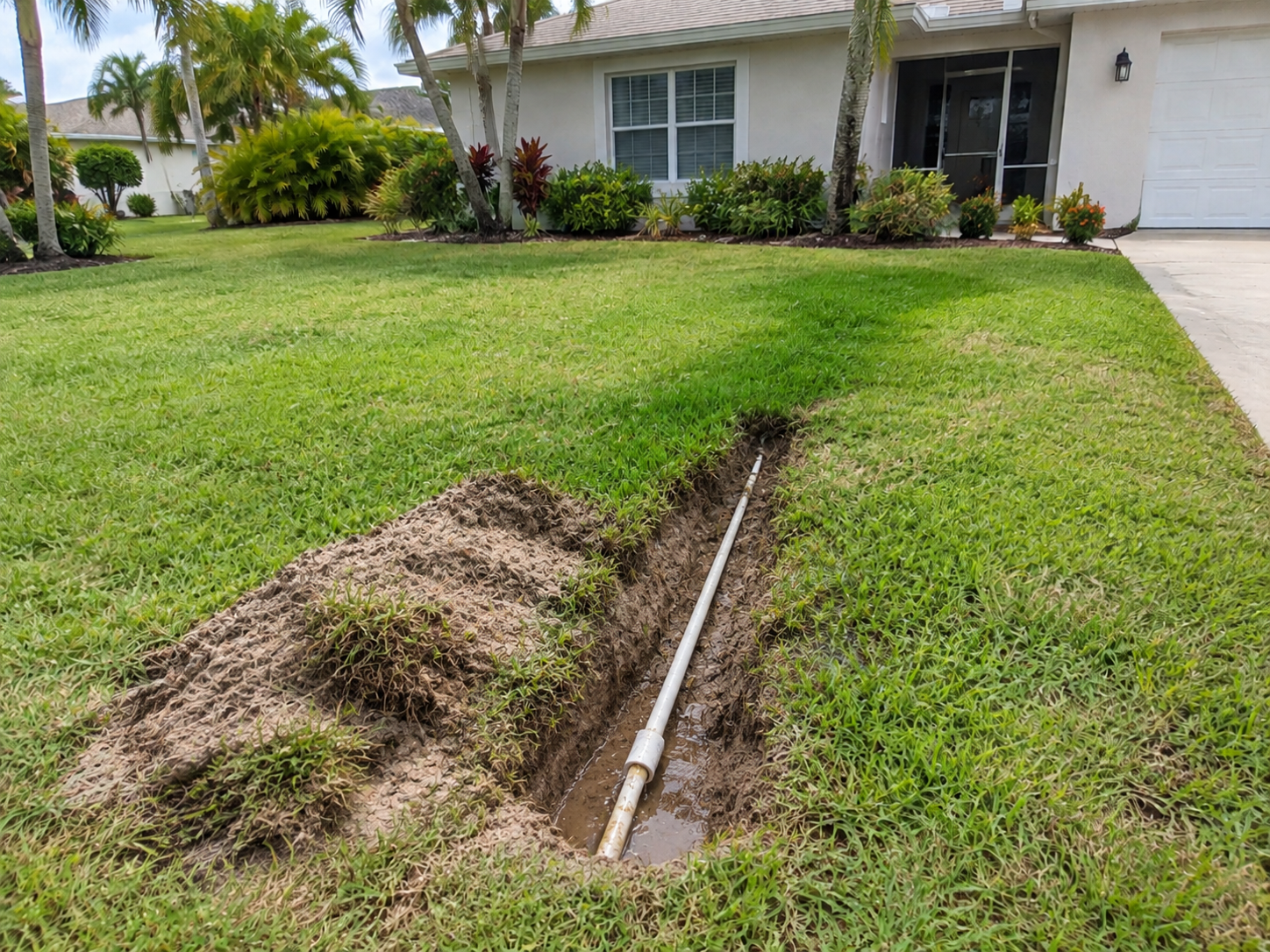
When the meter test, the isolation of irrigation and pool fill, pressure testing, acoustic location, and tracing all point to the same spot, that is where we dig — one opening, not a trench. If the results disagree, we keep working instead of digging on a guess.
Repair or replace the whole service line, and why it matters
A spot repair on the service line. We uncover the traced section, cut out the failed piece, replace it with new pipe, and pressure test the repair before anything is backfilled. It is the least work and the least digging, and it is the right answer when the rest of the line is in good condition. The trade-off is honest: if that pipe has more thin spots, another one can fail later, and you would pay for access a second time.
Replacing the full service line. A new line runs from the meter to the house and the old one is abandoned in place. It is more excavation and more work, but it ends the cycle, and it is usually the better answer when the line has already leaked more than once, when the copper is corroded along its length, or when older galvanized pipe keeps failing. It also takes the new pipe out of whatever soil condition damaged the old one.
Rerouting around concrete. When the traced line runs under a driveway, a walkway, or a pool deck, cutting the concrete is sometimes avoidable. We look at running the new line on a different path and open only the ground that has to be opened. We lay out all three options with what each one means long-term, and we tell you which one fits your line, including when a spot repair is enough.
What Affects the Cost
Detection and repair are quoted flat-rate before we start, and the number follows the job rather than a menu. What moves it: how much testing your property needs and how many zones, lines, and shutoffs have to be isolated; how deep the line runs and how accurately it can be traced; the size of the opening needed and what has to come up to reach the pipe; what sits over the line, since grass, landscaping, pavers, and poured concrete each come out and go back differently; whether the repair is a single section or the full service line from the meter to the house; whether the pipe is sound enough for a spot repair or is failing along its length; how much landscaping or hardscape restoration the job includes, because some of that work is separate from the plumbing; whether the local jurisdiction requires a permit and inspection for the repair; and whether the call comes in after hours.
We do not quote an underground leak over the phone, because a number given without testing is a guess. We quote your property after we have located your leak. If we open the ground and find something different from what the testing showed, we stop, show you what we found, and get your approval before doing more work.
Why Broward Homeowners Call Us
We are a licensed Florida plumbing contractor, license CFC1434216, based in Davie and working across Broward County for more than 20 years. Sandy yards, high water tables, and homes with buried copper are what we see every week, and we carry the equipment to find a service line leak without turning your yard into a trench. You get a flat-rate price before any work begins, a 12-month workmanship guarantee on the repair, and the findings documented in writing for your records or your insurer.
We also tell you when it is not a service line leak. If the loss turns out to be irrigation, a pool fill valve, a water softener stuck in backwash, or a toilet flapper, you will hear that plainly, and you will pay for that fix instead of an excavation. Se habla español, and our 24/7 emergency line is answered live by a person rather than a voicemail box.
Book Underground Leak Detection
If your meter moves with everything shut off, if a patch of your yard never dries, or if your water bill has climbed with no explanation, book a detection visit and we will find out what is actually happening. If water is running into your home right now, call (754) 258-5599 — the emergency line is answered live, day or night.
Underground water line leaks are part of our Leak Detection & Repair in Davie, FL service. If the leak is under the floor instead of the yard, see Slab Leak Detection & Repair. If the line has failed in more than one place, see Repiping & Pipe Replacement.
Common Warning Signs
Don't ignore these signs — they usually mean it's time to call a plumber.
How Scheduling Works
Three simple steps from phone call to fixed.
Call or Book Online
Call (754) 258-5599 or use our online booking tool to schedule a time that works for you.
We Arrive On Time
Your licensed plumber arrives within the scheduled window and diagnoses the issue.
Upfront Price, Then We Work
You get a flat-rate quote before any work begins. You approve, we fix it — no surprises.
Service Area
Based in Davie, FL, we serve homeowners across Broward County and South Florida. Same-day service is available for emergencies throughout our coverage area.
Frequently Asked Questions
Is the water line between the meter and my house my responsibility or the city's?
How can you find a leak in a buried pipe without digging up my whole yard?
My yard has a green patch that never dries. Is that a water leak or just my irrigation?
Do you have to cut my driveway or walkway to repair the line?
Is a spot repair enough, or does the whole service line need replacing?
Related Plumbing Services
See how else we can help with your plumbing.